Archives
- 2026-04
- 2026-03
- 2026-02
- 2026-01
- 2025-12
- 2025-11
- 2025-10
- 2025-09
- 2025-03
- 2025-02
- 2025-01
- 2024-12
- 2024-11
- 2024-10
- 2024-09
- 2024-08
- 2024-07
- 2024-06
- 2024-05
- 2024-04
- 2024-03
- 2024-02
- 2024-01
- 2023-12
- 2023-11
- 2023-10
- 2023-09
- 2023-08
- 2023-07
- 2023-06
- 2023-05
- 2023-04
- 2023-03
- 2023-02
- 2023-01
- 2022-12
- 2022-11
- 2022-10
- 2022-09
- 2022-08
- 2022-07
- 2022-06
- 2022-05
- 2022-04
- 2022-03
- 2022-02
- 2022-01
- 2021-12
- 2021-11
- 2021-10
- 2021-09
- 2021-08
- 2021-07
- 2021-06
- 2021-05
- 2021-04
- 2021-03
- 2021-02
- 2021-01
- 2020-12
- 2020-11
- 2020-10
- 2020-09
- 2020-08
- 2020-07
- 2020-06
- 2020-05
- 2020-04
- 2020-03
- 2020-02
- 2020-01
- 2019-12
- 2019-11
- 2019-10
- 2019-09
- 2019-08
- 2019-07
- 2019-06
- 2019-05
- 2019-04
- 2018-11
- 2018-10
- 2018-07
-
br Dihydrotestosterone in adult fish and frogs br New
2023-03-02
Dihydrotestosterone in adult fish and frogs New perspectives and next directions Similar to other androgens, DHT can modulate reproductive endpoints in both fish and amphibians. However, predicting the effects of DHT can be challenging, as reproductive homeostasis is dependent upon the balance
-
The authors thank Dr J Aoki University of Tokyo for
2023-03-02
The authors thank Dr. J. Aoki, University of Tokyo, for kindly providing 5E5-ATX antibody. This work was supported by a grant from the Deutsche Forschungsgemeinschaft to A.E.K. (KR4391/1-1), research grants “Primary sclerosing cholangitis” from the Deutsche Crohn-Colitis-Vereinigung and the Norwegia
-
The Kelch like ECH associated protein Keap Nrf signaling
2023-03-02
The Kelch-like ECH-associated protein 1 (Keap1)-Nrf2 signaling pathway functions as one of the key regulator of the cellular defense system against oxidative stress [26]. Nrf2 is a redox-sensitive transcription factor, that is sequestered in the cytoplam by binding to Keap1; however, under oxidative
-
The molecular mechanisms involved in
2023-03-02
The molecular mechanisms involved in the pathogenesis of cholestatic pruritus remain unknown [45], [46]. Indeed, there has been an enormous effort at understanding the etiology of PBC-related pruritus, including work at the cellular and molecular level, but such efforts have not been translated into
-
Through activation of the CD GOPC pathway attenuated
2023-03-02
Through activation of the CD46–GOPC pathway, attenuated/vaccinal MeVs rapidly induce a transient phase of autophagy which then diminishes with no signs of negative regulation and precedes a second autophagy phase related to viral protein synthesis [115]. In sharp contrast, virulent MeVs do not inter
-
Accumulating data suggest that ROS trigger autophagy
2023-03-02
Accumulating data suggest that ROS trigger autophagy but, in turn, autophagy reduces ROS levels [23]. Our results are in agreement because 27-OH mediated autophagy induction interms of LC3 II formation and Beclin 1 protein expression was suppressed by treating the promonocytic cells with the antioxi
-
exemplifies three of the compounds investigated in
2023-03-02

exemplifies three of the compounds investigated in the selection for a candidate drug (CD). Our first criteria was an IC The b ng australia as such did not show any genotoxicity in the SOS/umu assay, but this does not say anything about any possible genotoxicity of its metabolites or degradation pro
-
In this paper we described synthesis
2023-03-02

In this paper, we described synthesis, biological evaluation and docking study of 3-aroyl-1-(4-sulfamoylphenyl)thiourea derivatives 4a–o as 15-lipoxygenase inhibitors. Results and discussion Conclusion We designed and synthesized a novel of thiourea derivatives containing phenylsulfonamide mo
-
As previously mentioned when hypoxia treated cells become re
2023-03-02
As previously mentioned when hypoxia-treated cells become re-oxygenated they sustain a significant amount of DNA damage which has been attributed to the formation of reactive oxygen species . This finding represents more than just an interesting in vitro phenomenon as within a tumor, cells have been
-
The allosteric site of class C receptors is generally
2023-03-02
The allosteric site of class C receptors is generally located on the extracellular side of the TM domain (Brauner-Osborne et al., 2007, Christopher et al., 2015, Dore et al., 2014, Gregory et al., 2011, Harpsoe et al., 2017, Kniazeff et al., 2011, Pin and Prezeau, 2007, Urwyler, 2011, Wu et al., 201
-
Several structural classes of ASK
2023-03-02
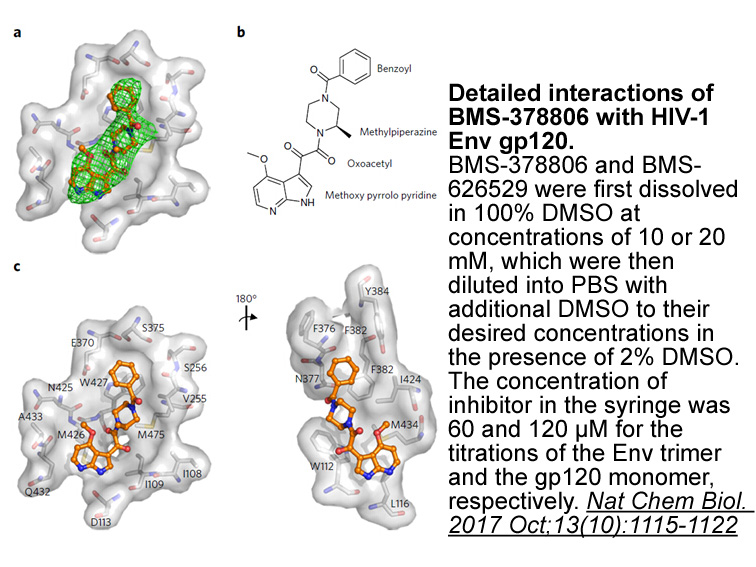
Several structural GW9662 sale of ASK1 inhibitors, mostly from industry but also from academia, have been identified over the last decade. In 2012, Terao et al. (Takeda) reported imidazo[1,2-α]pyridine () as a potent ASK1 inhibitor derived from structure-based drug design. GSK, Merck and Gilead re
-
To circumvent these issues multiple
2023-03-01
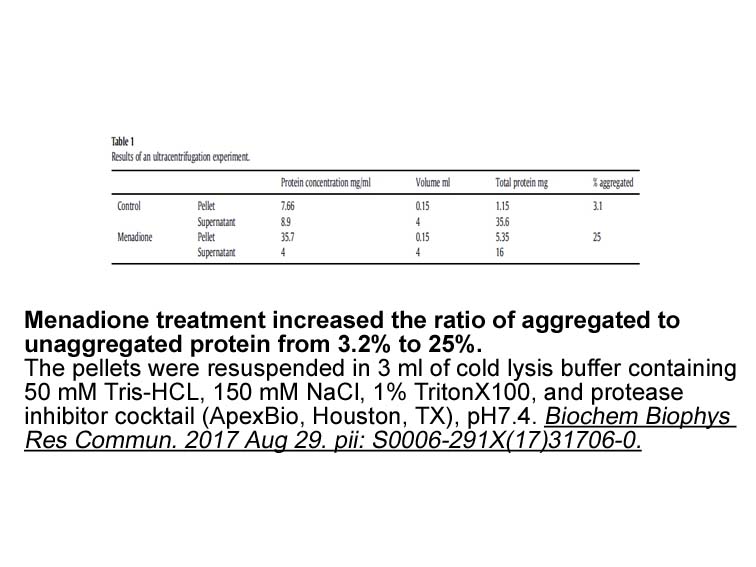
To circumvent these issues, multiple approaches have been developed that target small fractions of the genome, thus reducing the sequencing burden (Dostie et al., 2006; Fullwood et al., 2009; Mumbach et al., 2016). Application of one such approach, chromosome conformation capture carbon copy (5C), w
-
There are several AP binding sites in the sequence
2023-03-01

There are several AP-1 Shikonin in the sequence of TIMP-1 promoter [18,19]. EBV could up-regulate TIMP-1 expression by binding to the AP-1 site in the TIMP-1 promoter [18]. IL-32, a newly multi-function cytokine, could activate AP-1, NF-κβ, p38MAPK signal pathways, and induce cytokine expressions,
-
It was deduced empirically that
2023-03-01
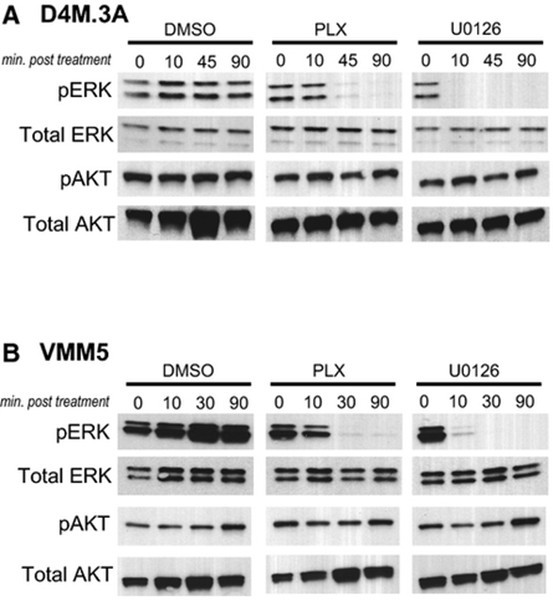
It was deduced empirically that the helix direction of the COOC torsion might relate to the sign of the peroxide Cotton effect. Huang reported ab initio calculation of the peroxide bond using MRDCI method and DZP basis set, but only the fragment CH3OOCH3 instead of full molecule was studied [19]. Si
-
Although many factors influence the effects of
2023-03-01
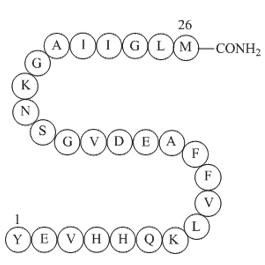
Although many factors influence the effects of medications, during recent years it has become evident that genetic factors could explain the differences between individuals in drug response. These differences are due to variants in genes encoding drug targets [8]. The challenge for pharmacogenetics
16719 records 361/1115 page Previous Next First page 上5页 361362363364365 下5页 Last page